




TL;DR
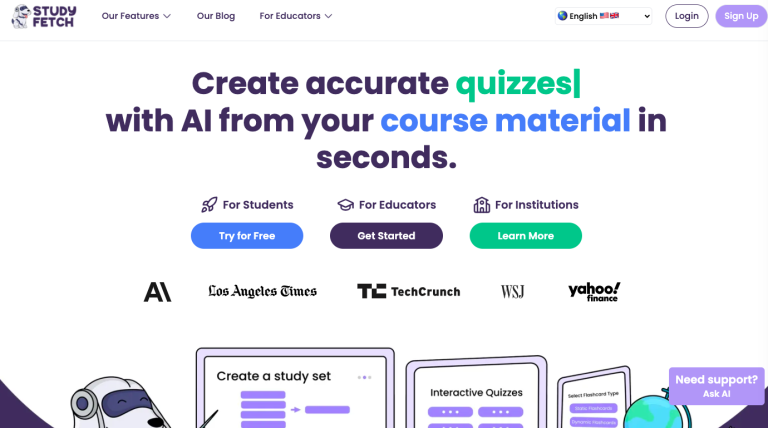
Study Fetch is an AI study platform that turns uploaded materials into flashcards, quizzes, notes, and other interactive learning tools. It is best suited for students who want faster study workflows, stronger revision support, and AI-guided help across different learning formats.
We give Study Fetch 8/10 for its strong study-tool variety, useful AI tutor experience, and practical workflows for turning course material into quizzes, notes, and flashcards.
Study Fetch is built for students and lifelong learners who want to organize, understand, and retain information more effectively. Its biggest strength is turning static study materials into interactive learning tools, while Spark.E adds AI tutoring support for questions, revision, and concept review. It is especially useful for students comparing it with Quizlet, Jungle AI, Mindgrasp, Feynman AI or Penseum and similar AI study tools.
Who is Study Fetch For?
- Students: Useful for school, college, and university students who want AI-powered revision tools, note support, and faster study workflows.
- Educators: Helpful for creating quizzes, study aids, and interactive materials from class content.
- Study Groups: Useful for collaborative learning through shared study resources and interactive review tools.
- Students comparing alternatives: A relevant option for users looking beyond Quizlet, MindGrasp, Penseum, Jungle AI, or other AI study assistants.
Key Features of Study Fetch
AI-Powered Flashcards: Generate flashcards from PDFs, notes, videos, and other uploaded study materials.
Spark.E AI Tutor: Ask questions, review material, and get guided learning support from the built-in AI tutor.
Quizzes and Practice Tests: Turn study content into quiz-based revision tools.
Essay Feedback: Get AI-driven writing and assignment feedback to improve written work.
Visual Learning Support: Upload diagrams and images for explanation and interpretation.
Lecture Support: Record or process lecture material and turn it into usable study notes.
Audio Summaries: Convert study content into shorter audio-friendly summaries.
Interactive Learning Tools: Use AI-generated study formats to review concepts in multiple ways.
Study Planning: Organize revision with structured study support.
Collaboration Tools: Share materials and study with others more efficiently.
How to Use Study Fetch
- Sign up: Create an account on the Study Fetch website.
- Upload materials: Add PDFs, videos, notes, slides, or images.
- Generate study tools: Convert materials into flashcards, quizzes, notes, and summaries.
- Use Spark.E: Ask questions and review concepts with the AI tutor.
- Improve retention: Use quizzes, essay feedback, and study aids to reinforce learning.
Pros
- Strong variety of AI-powered study tools in one platform
- Spark.E adds useful tutoring and revision support
- Good fit for turning existing study material into active learning formats
- Helpful for students comparing Quizlet-style and AI-tutor workflows
Cons
- Best value likely depends on paid plans for heavier usage
- Output quality still needs student review, especially for important assignments
- Some users may prefer a simpler single-purpose flashcard tool
- More useful for active students than casual users
FAQs
What is Study Fetch?
Study Fetch is an AI learning platform that turns uploaded study content into flashcards, quizzes, notes, and other interactive tools for revision and learning.
Is Study Fetch free?
Study Fetch offers a free plan, but advanced features and heavier usage are available on paid plans.
How much is Study Fetch?
Study Fetch pricing starts at about $7.99/month for the Base plan and around $11.99/month for the Premium plan, based on the pricing referenced on the site.
What are alternatives to Study Fetch?
Alternatives include Quizlet, MindGrasp, Penseum, Jungle AI, and other AI study tools focused on flashcards, note generation, and tutoring support.
Why choose Study Fetch over Quizlet?
Study Fetch goes beyond traditional flashcards by adding AI tutoring, essay feedback, lecture support, and more flexible study-material conversion workflows.