
Social media has become the backbone of digital influence, with businesses, influencers, and brands all competing for visibility. One of the most common strategies used to gain traction is engagement farming – a method designed to manipulate social media algorithms by artificially increasing interactions.
This practice involves deliberately engineering likes, comments, and shares to boost a post’s reach. While it can create the appearance of popularity and credibility, engagement farming raises ethical concerns, affects platform integrity, and often leads to short-term gains rather than sustainable growth.
In this article, we’ll explore:
- Engagement farming meaning and how it works
- Common techniques used by influencers and brands
- The risks associated with artificial engagement
- How to identify and avoid engagement farming tactics
- Best practices for building authentic engagement
What is Engagement Farming?
Engagement farming refers to deliberate strategies used to inflate social media engagement metrics artificially. These tactics are commonly used by influencers, brands, and digital marketers to boost visibility by taking advantage of platform algorithms.
Since social media platforms prioritize content that gets high engagement, posts with more likes, shares, and comments are often promoted to a larger audience. This creates an incentive for users to game the system rather than focusing on organic growth.
Some engagement farming strategies rely on manipulative engagement tactics, while others involve outright bot-generated interactions. While not always illegal, these methods can mislead audiences and distort the true popularity of content.
How Engagement Farming Works
Engagement farming operates on the principle that higher engagement leads to better algorithmic visibility. Social media platforms use engagement as a ranking signal to determine which posts are shown on users’ feeds, recommended sections, and trending pages.
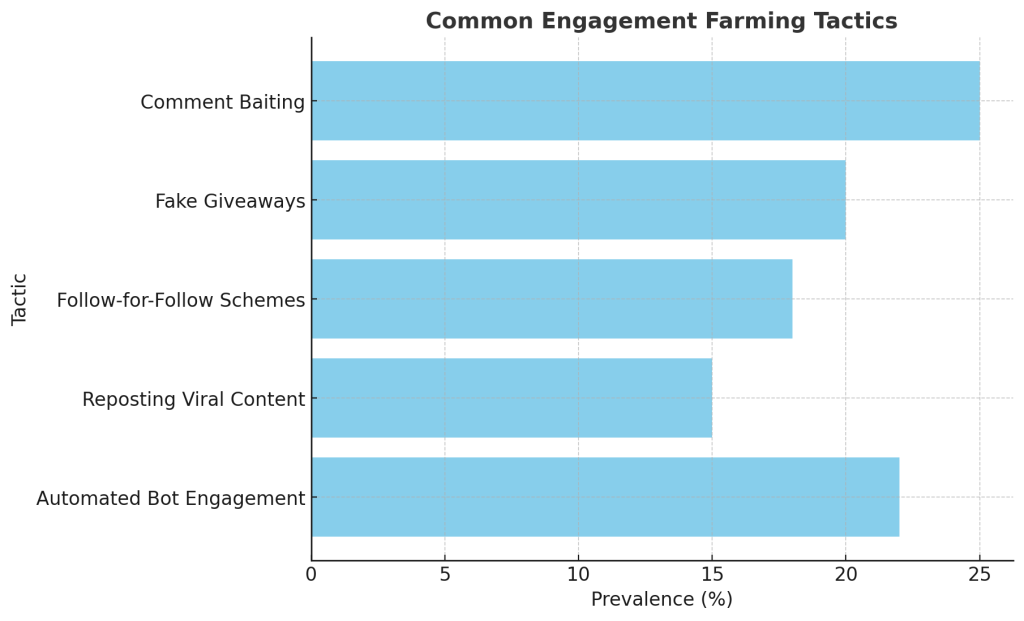
There are several key tactics used to farm engagement:
1. Comment Baiting
One of the most common forms of engagement farming is comment baiting, where users are encouraged to leave a response through clickbait-style prompts. These often involve controversial or overly simplistic questions designed to drive interaction.
Examples include:
- “What’s the best movie of all time? Comment below!”
- “Only 1% of people can solve this puzzle. Can you?”
- “Drop an emoji if you agree!”
This type of engagement farming exploits the way algorithms favor posts with high comment activity, making them more likely to appear in recommendations.
2. Fake Giveaways and Contests
Many influencers and brands run engagement-based giveaways, requiring users to like, comment, and share a post to enter. While some are legitimate, others never select winners or only use the contest as a way to drive short-term engagement spikes.
3. Follow-for-Follow and Engagement Pods
Follow-for-follow schemes and engagement pods involve groups of users agreeing to engage with each other’s content artificially. This method inflates engagement metrics but does not contribute to genuine audience growth.
Common signs of engagement pods include:
- Repetitive or overly generic comments from the same users
- High engagement but low follower retention
- Disproportionate likes and comments compared to actual views
4. Reposting Viral Content for Engagement
Some accounts recycle previously viral content with slight modifications, hoping to capture engagement from users who have never seen it before. This approach is common in meme pages and aggregator accounts, where trending posts are reposted to drive interactions.
5. Automated Engagement Through Bots
Social media automation tools can be programmed to like, comment, and share posts to create artificial engagement. While this method can boost visibility, most platforms actively detect and penalize bot-driven activity.
The Risks of Engagement Farming

While engagement farming can yield short-term visibility and follower growth, it comes with serious risks:
1. Platform Penalties and Algorithm Changes
Social media platforms like Instagram, YouTube, TikTok, and Twitter regularly update their algorithms to penalize artificial engagement. Accounts caught using engagement farming tactics risk:
- Shadowbanning, where content becomes invisible to non-followers
- Reduced reach, making it harder to gain organic traffic
- Permanent account suspension in extreme cases
2. Loss of Trust and Credibility
Users are becoming increasingly aware of manipulated engagement tactics. Once audiences recognize that an influencer or brand is inflating their engagement artificially, they may lose trust in the authenticity of the content.
3. Low-Quality Audience Growth
Engagement farming does not necessarily translate to meaningful audience connections. Many followers gained through these methods are either bots, disengaged users, or short-term followers who unfollow once engagement tactics stop.
4. Devaluation of Social Media Marketing Metrics
When artificial engagement becomes widespread, it dilutes the effectiveness of social media marketing analytics. Brands relying on inflated engagement numbers to make decisions may end up investing in influencers with low genuine impact.
How to Identify and Avoid Engagement Farming
If you want to ensure that your social media interactions are genuine, here are some ways to spot and avoid engagement farming tactics:
Signs of Engagement Farming
- Excessive generic comments (e.g., “Great post!” repeated across multiple profiles)
- Unrealistically high engagement with low-quality content
- Massive engagement spikes followed by sharp declines
- Fake giveaways with no real winners announced
- Follower counts that grow quickly but don’t translate into meaningful engagement
Best Practices for Building Authentic Engagement
Instead of engagement farming, businesses and influencers should focus on organic, value-driven strategies for audience growth:
Create High-Quality, Valuable Content
Engagement should be driven by genuine audience interest. Posts that provide insightful information, entertainment, or meaningful discussions naturally attract real interactions.
Engage Authentically With Your Audience
Rather than relying on automated engagement, brands should respond to comments, start real conversations, and build relationships with their followers.
Leverage Data and Insights to Improve Engagement
Use platform analytics to understand what type of content resonates with your audience. Focus on strategies that encourage natural conversations instead of artificial interaction spikes.
Build a Community, Not Just a Following
True influence comes from community engagement, not inflated metrics. Encourage discussions, host Q&A sessions, and interact with your audience beyond just vanity metrics.
Also Explore: AI Tools for Social Media Management
Conclusion
Engagement farming has become a common tactic in social media marketing, but its long-term effectiveness is questionable. While it can provide a temporary boost in visibility, it comes with ethical concerns, platform risks, and a lack of real audience engagement.
The key to sustainable growth in the digital space is authenticity and value-driven content. Instead of resorting to artificial engagement tactics, influencers and brands should focus on genuine audience interactions, organic growth strategies, and high-quality content creation.
By understanding how engagement farming works and avoiding these tactics, businesses and content creators can build long-lasting credibility and true audience connections.
Add us as a preferred source on Google, and our reviews and picks show up in your Top Stories and AI Overviews.