
Claude Sonnet 4.6 is the Claude model most people should look at first. It is Anthropic’s practical default for coding, writing, analysis, and agent-style work, and the 4.6 update matters because more of Claude’s serious capability now sits in the model that is easiest to adopt day to day.
If you are weighing Sonnet inside a broader assistant choice rather than only a model choice, our Claude vs ChatGPT comparison is the faster place to start.
That is the real story here. Sonnet 4.6 is not just another version bump. It makes the mainstream Claude experience stronger in coding, long-context work, and multi-step execution without forcing most users into the premium Opus tier.
If you want the full chronology, see our Claude updates timeline. If you are comparing Claude against the broader frontier field, also see our best AI models in 2026 breakdown. If you are deciding which Claude plan actually makes sense around Sonnet usage, use our Claude plans guide. If your real question is whether you should step up to the premium tier, compare this page with our Claude Opus 4.7 guide. If you want to decide whether Sonnet 4.6 is the right Claude model for your work, start here.
Quick Verdict
Claude Sonnet 4.6 is the best starting point for most Claude users because it balances capability, availability, and price better than the rest of the Claude lineup.
- Best for: users who want strong coding, polished writing, analysis, and long-context work without paying for Opus-level usage by default.
- Less ideal for: teams that want the absolute highest Claude tier for difficult coding and agent workloads, or users who only need lightweight chat and do not care about model quality.
- What changed: Sonnet 4.6 pushed more of Claude’s coding, context, and execution strength into the model most people will actually use.
- Why it matters: Claude feels more competitive as an everyday work model when the default tier gets this much stronger.
If you want the short read: Sonnet 4.6 is probably enough for most serious users, and that is what makes it important.
What Is Claude Sonnet 4.6?
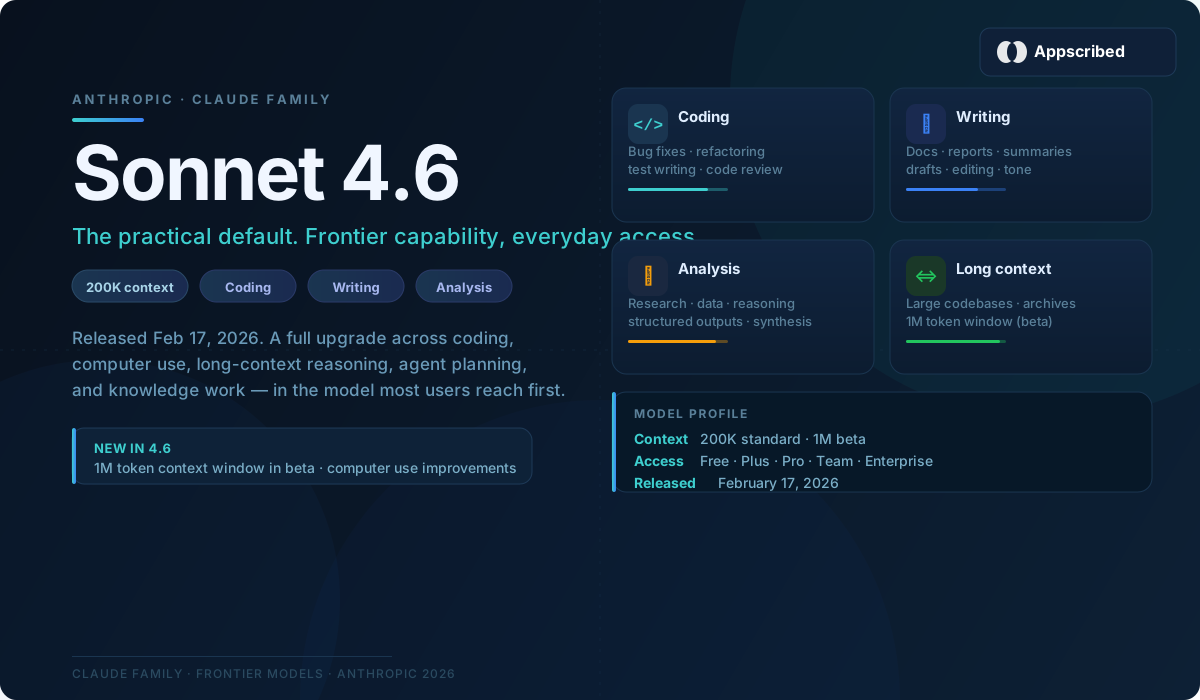
Claude Sonnet 4.6 is Anthropic’s hybrid reasoning model for everyday professional work. It sits below Opus 4.7 in the lineup, but it is the version more people are likely to use across Claude on web, mobile, and API-based workflows.
That matters because model quality only changes the market when people can actually use it. Sonnet 4.6 brings stronger coding, agent performance, and long-context handling into the part of Claude that is much easier to adopt as a default.
- It is built for coding, knowledge work, and professional reasoning.
- It is available much more broadly than Opus.
- It supports a 1M token context window on the API in beta.
- It is priced low enough to stay realistic for real usage instead of only prestige usage.
What Changed In Claude Sonnet 4.6?
The practical shift is straightforward: Sonnet got closer to frontier-tier Claude capability without becoming a premium-only product.
In real terms, the 4.6 update pushed Sonnet forward in the areas that matter most:
- coding: better performance on engineering tasks, code generation, and structured implementation work
- agents: stronger fit for tool-using and multi-step workflows
- long-context work: better handling of large working sets, with 1M context available in beta on the API side
- professional output: better default quality on analysis, writing, and work that needs polish instead of raw speed alone
The reason this matters is that Claude now feels stronger in everyday use, not just in showcase use cases. If your main interest is developer workflow specifically, pair this with our Claude Code guide because Sonnet 4.6 is one of the main models powering that story.
Claude Sonnet 4.6 Pricing
Pricing is one of the most useful parts of the Sonnet story because it explains why this model matters more broadly than Opus.
- API pricing: $3 per million input tokens and $15 per million output tokens
- Cost controls: prompt caching and batch processing reduce cost for heavier API users
- Product reality: Sonnet is the Claude tier that makes strong model quality more reachable for everyday work
That pricing is a big part of the model’s strategic value. Sonnet 4.6 is not cheap in an absolute sense, but it is much easier to justify than treating Claude Opus 4.7 as your default for everything. If you want the full plan-selection view across Free, Pro, Max, Team, Enterprise, and API usage, read our Claude plans guide.
Who Gets Access To Sonnet 4.6?
Sonnet 4.6 is available across the main Claude surfaces, which is another reason it matters more than a premium flagship alone.
- Claude on web
- Claude on iOS and Android
- Anthropic’s developer platform
- Amazon Bedrock
- Google Cloud Vertex AI
- Microsoft Foundry
The practical implication is simple: Sonnet 4.6 is not a niche release. It is the version many users and teams will actually encounter first. If your next question is whether that means Pro is enough or Max makes more sense, compare our Claude Pro pricing and Claude Max pricing breakdowns.
Does The 1M Context Window Matter?
Yes, but only if you think about it as a workflow advantage rather than a spec sheet flex.

A 1M token context window matters when the job is too large for shallow prompting: large repos, long research sets, dense documentation, and multi-document synthesis work. It matters much less if your usage is mostly short prompts and quick back-and-forth chat.
So the better question is not “does Sonnet 4.6 have a 1M context window?” The better question is “do you actually do work large enough to benefit from it?”
Claude Sonnet 4.6 Vs Claude Opus 4.7
This is the key decision for many Claude users.
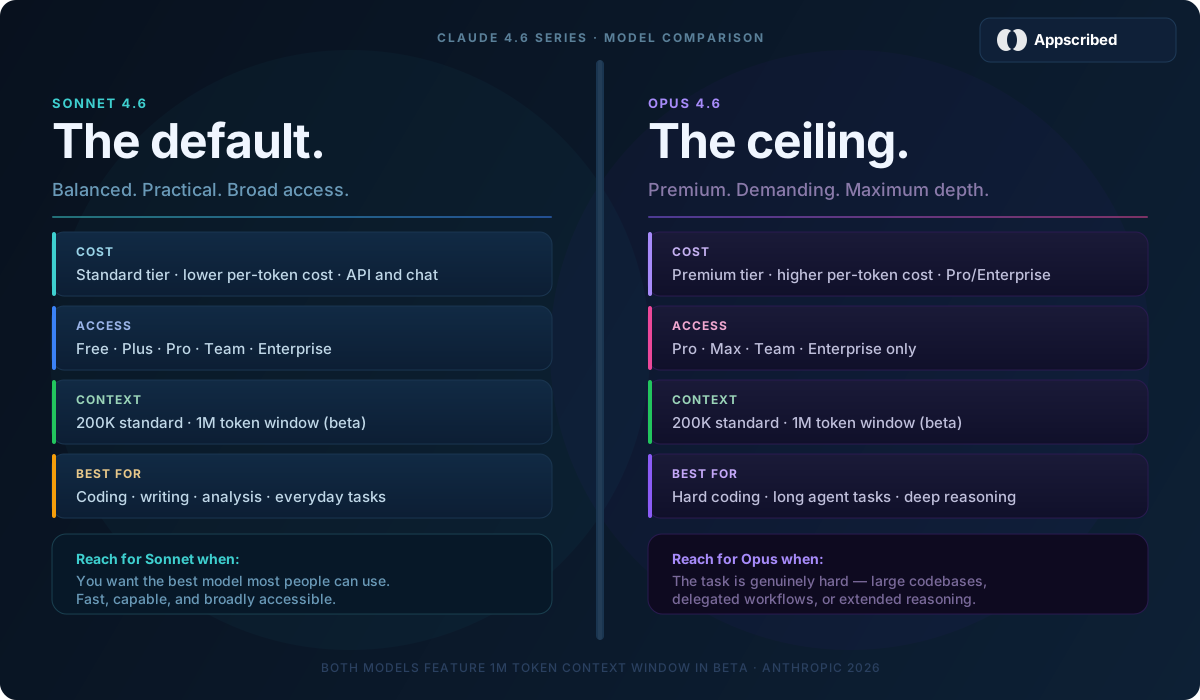
- Choose Sonnet 4.6 if you want a strong everyday default for coding, writing, and analysis at a more practical cost.
- Choose Opus 4.7 if your work is deeply coding-heavy, agent-heavy, or premium enough that you want Claude’s top ceiling rather than the best balance.
The difference is not that Sonnet is weak and Opus is strong. The real difference is that Sonnet is the better balance model, while Opus is the higher-ceiling model.
For many teams, that means Sonnet should be the default and Opus should be the escalation tier.
What Sonnet 4.6 Is Best For
- everyday coding and development assistance
- long-form writing and polished editorial output
- research and document-heavy analysis
- agent-style tasks that need a capable but practical model
- teams that want one strong default Claude model instead of always paying for Opus
That mix is exactly why Sonnet 4.6 matters. It is broad enough to be useful every day, but strong enough to stay relevant in serious work.
Where Sonnet 4.6 Still Falls Short
- It is still not the highest-ceiling Claude model.
- Users doing the hardest coding and agent work may still want Opus.
- The 1M context benefit is API-beta oriented, not equally available across every surface.
- For lighter casual usage, even Sonnet can be more model than some users need.
That means Sonnet 4.6 is not the universal answer. It is the best practical answer for a lot of real users.
Our Take
Claude Sonnet 4.6 matters because it moves more of Claude’s serious strength into the tier that can actually become a default.
That is what changes adoption. Not just having a premium flagship, but making the mainstream model strong enough that people can code, write, research, and run agent-style workflows without feeling like they are settling.
If you are trying to choose one Claude model to start with, Sonnet 4.6 is probably the right answer. If you outgrow it, that is when Opus makes more sense. For the bigger Anthropic picture, move next to our latest Claude updates hub, our Claude plans guide, our Claude Code guide, and our Claude vs GPT vs Gemini model comparison.
Frequently Asked Questions
What is Claude Sonnet 4.6?
Claude Sonnet 4.6 is Anthropic’s mainstream hybrid reasoning model for coding, analysis, writing, and agent-style work. It is the Claude tier most users should look at first.
How much does Claude Sonnet 4.6 cost?
API pricing starts at $3 per million input tokens and $15 per million output tokens, with lower effective cost available through prompt caching and batch processing. For the broader split between app subscriptions and Claude API pricing, use our pricing guide.
Is Claude Sonnet 4.6 better than Opus?
Not in absolute ceiling. Opus remains the higher-end Claude model. But Sonnet 4.6 is the better balance for many users because it is more practical as an everyday default.
Does Claude Sonnet 4.6 have a 1M context window?
Yes, Anthropic positions the 1M context window as available in beta on the API side. It matters most for large repos, long documents, and multi-source analysis.
Who should use Claude Sonnet 4.6?
Claude Sonnet 4.6 is best for users who want a strong everyday Claude model for coding, writing, analysis, and professional work without defaulting straight to Opus.
Add us as a preferred source on Google, and our reviews and picks show up in your Top Stories and AI Overviews.