
This comprehensive guide walks you through everything you need to know about AI for sales in 2026. You’ll discover the fifteen best AI sales tools currently available, understand how each one fits into your workflow, and learn exactly how to implement them for maximum results.
We’ve organized this guide into clear sections so you can jump to what matters most to you right now. Whether you’re just starting to explore AI sales tools or looking to optimize your existing stack, you’ll find actionable insights that deliver measurable improvements.
Why AI for Sales Matters Right Now
| Metric | Impact |
|---|---|
| Productivity Increase | Up to 30% improvement |
| Revenue Growth | 13-15% average increase |
| Sales Cycle Reduction | 68% shorter time to close |
| Sales Team Adoption | Only 51% (vs 77% in marketing) |
| Time Saved Weekly | 10+ hours per rep |
The Bottom Line: Your competitors are already using these tools. The gap is widening every quarter.
Get Your Ai Sales Tools Implementation Playbook
Send download link to:
Understanding AI for Sales: The Simple Explanation
Think of AI for sales as having an incredibly smart assistant who never sleeps, never forgets a follow-up, and can analyze thousands of data points in seconds.
Here’s what AI for sales actually does:
Research: AI scans company websites, news articles, social media, and databases to understand each prospect’s business challenges and priorities. What used to take your sales reps three hours of research per prospect now happens automatically in minutes.
Outreach: AI crafts personalized emails that reference specific details about each prospect’s situation. These aren’t generic templates with names swapped in, but genuinely customized messages that demonstrate you understand their business.
Follow-up: AI tracks every interaction and knows exactly when to follow up, which channel to use, and what message will resonate based on how prospects engaged with previous communications.
Analysis: AI reviews every sales call, identifies which approaches work best, and provides specific coaching feedback based on actual performance data rather than gut feelings.
Forecasting: AI analyzes deal activity and engagement patterns to predict which opportunities will close and which are at risk, giving you accurate revenue forecasts you can actually trust.
The shift from manual to AI-powered sales is similar to how GPS transformed driving. You can still get where you’re going without it, but you’ll waste time on wrong turns, miss faster routes, and arrive after competitors who use better navigation.
Why Sales Teams Are Adopting AI Tools in 2026
The sales profession faces a fundamental challenge that AI solves elegantly.
Research shows that sales representatives spend less than thirty-five percent of their time actually selling. The rest gets consumed by administrative work, data entry, research, scheduling, and other necessary but repetitive tasks.
Here’s where that time goes:
| Activity | Hours Per Week | Percentage |
|---|---|---|
| Selling Activities | 14 hours | 35% |
| Data Entry & CRM Updates | 8 hours | 20% |
| Email & Communication | 7 hours | 17.5% |
| Research & Prospecting | 6 hours | 15% |
| Internal Meetings | 5 hours | 12.5% |
AI for sales automation reclaims those lost hours by handling the repetitive work automatically. Your sales team can redirect that energy toward building relationships, understanding customer needs, and closing deals that genuinely require human expertise.
The productivity gain compounds over time. A sales representative who recovers ten hours weekly can make fifty additional prospect calls, conduct twenty more discovery meetings, or follow up with a hundred stalled opportunities. Those extra activities translate directly into more closed deals and higher revenue.
Beyond efficiency, AI sales tools deliver capabilities that humans simply cannot match at scale. An AI can simultaneously monitor engagement signals across thousands of prospects, identifying exactly who is showing buying intent right now. It can analyze every sales call your team conducts, spotting patterns in successful conversations that even your best performers might not consciously recognize.
The competitive landscape has shifted dramatically. Organizations that have effectively integrated AI for sales and marketing are achieving results that traditionally-structured teams cannot match, creating advantages that compound with each passing quarter.
The 15+ Best AI Sales Tools for 2026
Let’s examine the specific AI sales tools that are delivering measurable results for sales teams right now. We’ve organized these by primary function to help you understand where each tool fits in your workflow.
Ai Sales Tools Comparison
Send download link to:
CRM-Integrated AI Platforms
These AI sales tools integrate directly into your customer relationship management system, providing intelligence and automation within the platform you already use daily.
1. Salesforce Einstein GPT
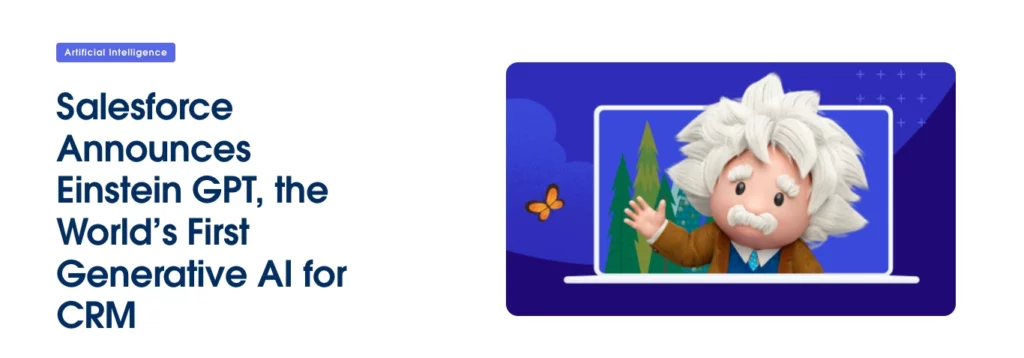
What It Does: Salesforce Einstein functions as an AI co-pilot embedded directly in your Sales Cloud. It analyzes all your CRM data to score leads, forecast sales outcomes, and automatically draft personalized emails or call summaries.
Best For: Teams already using Salesforce who want AI capabilities without switching platforms.
Key Features:
- Predictive lead scoring based on historical conversion data
- Opportunity insights that highlight risks and next steps
- Auto-generated emails that match your successful messaging patterns
- Revenue forecasting with confidence intervals
- Deal health analysis showing engagement trends
Pricing: Starts at $50 per user per month (requires Salesforce Sales Cloud)
Real Results: Salesforce customers report twenty-seven percent improvement in forecast accuracy and thirty-eight percent faster opportunity progression when Einstein analyzes deals.
2. HubSpot Sales Hub AI
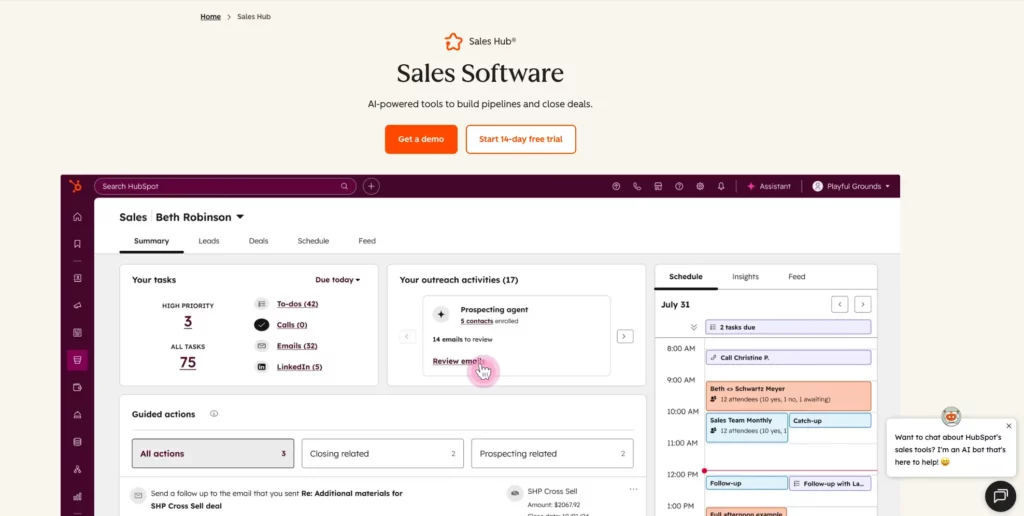
What It Does: HubSpot’s built-in AI helps sales teams prioritize leads, automate follow-ups, and personalize outreach at scale. It learns from your successful deals to recommend actions that increase win rates.
Best For: Small to medium businesses wanting an all-in-one CRM with integrated AI.
Key Features:
- Conversation intelligence with call transcription and analysis
- Predictive lead scoring that identifies high-value prospects
- Email sequencing with AI-optimized send times
- Meeting scheduling assistant that handles back-and-forth coordination
- Deal forecasting dashboard with probability assessments
Pricing: Starts at $90 per user per month
Real Results: HubSpot users report forty-three percent higher lead-to-customer conversion rates when using AI prioritization features.
3. Microsoft Dynamics 365 Sales
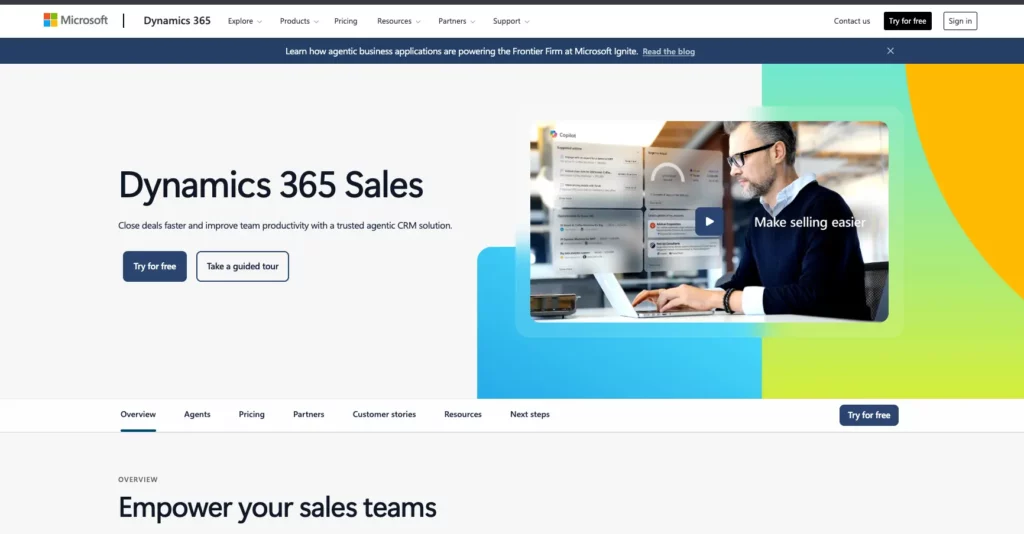
What It Does: Microsoft’s AI analyzes customer interactions across email, meetings, and calls to provide relationship insights and next-best-action recommendations.
Best For: Enterprise teams using Microsoft’s ecosystem (Teams, Outlook, Office 365).
Key Features:
- Relationship analytics showing communication health
- AI-driven engagement insights from Teams and email
- Predictive opportunity scoring with win probability
- Automated data capture from emails and calendar
- Integration with LinkedIn Sales Navigator
Pricing: Starts at $65 per user per month
Real Results: Teams report saving five hours weekly on administrative tasks through automated data capture.
Get Your Ai Sales Tools Implementation Playbook
Send download link to:
Conversation Intelligence Platforms
These AI tools for sales record, transcribe, and analyze customer conversations to provide coaching insights and deal intelligence.
4. Gong
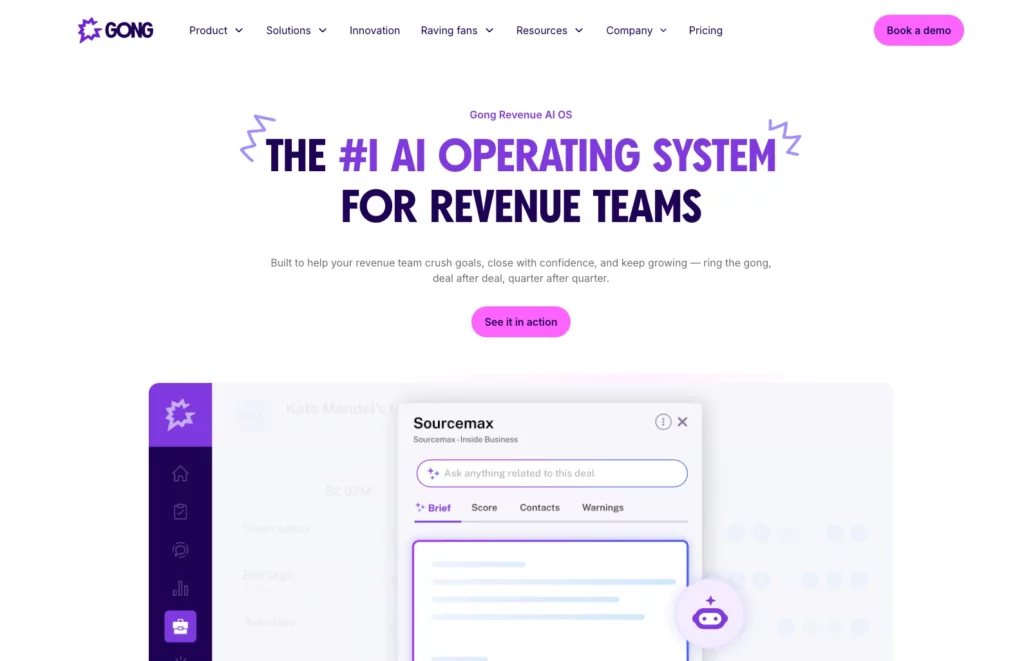
What It Does: Gong records every sales call and meeting, then uses AI to identify what successful representatives say differently, which objections appear most frequently, and which deals are truly on track versus at risk.
Best For: Teams that want to scale winning behaviors and improve forecast accuracy.
Key Features:
- Call recording and automatic transcription
- Talk-time ratio analysis ensuring reps ask questions
- Competitor mention tracking across all conversations
- Deal risk identification based on engagement patterns
- Top performer playbook creation from actual conversations
Pricing: Contact for custom pricing (typically $1,200+ per user annually)
Real Results: Gong customers achieve nineteen percent win rate improvement by identifying and replicating successful conversation patterns.
5. Chorus.ai (ZoomInfo)

What It Does: Similar to Gong, Chorus analyzes sales conversations to surface insights, but with deeper integration into ZoomInfo’s prospecting data.
Best For: Teams using ZoomInfo who want conversation intelligence tied to prospect research.
Key Features:
- Real-time conversation coaching during calls
- Deal intelligence showing buying signals
- Objection pattern analysis across your pipeline
- Integration with ZoomInfo intent data
- Playlist creation for training new reps
Pricing: Part of ZoomInfo packages (contact for pricing)
Real Results: Users report thirty-two percent faster rep onboarding through AI-powered coaching playlists.
Ai Sales Tools Comparison
Send download link to:
6. Avoma

What It Does: Avoma provides conversation intelligence at a more accessible price point, recording meetings and automatically generating summaries, action items, and searchable transcripts.
Best For: Growing teams wanting conversation intelligence without enterprise pricing.
Key Features:
- Automated meeting recording and transcription
- AI-generated meeting summaries and next steps
- CRM integration for automatic activity logging
- Searchable conversation library
- Collaborative note-taking during calls
Pricing: Starts at $19 per user per month
Real Results: Teams save three hours weekly on meeting notes and CRM updates.
Prospecting and Lead Generation Tools
These AI sales tools help you find the right prospects, enrich contact data, and launch personalized outreach campaigns.
7. ZoomInfo

What It Does: ZoomInfo combines a massive B2B contact database with AI that identifies which prospects are actively researching solutions like yours right now.
Best For: Teams doing outbound prospecting who need accurate contact data and intent signals.
Key Features:
- Intent data showing active buyers
- Technographic information on prospect tech stacks
- Org charts identifying decision-makers
- Email and phone number verification
- Integration with major CRMs and sales tools
Pricing: Contact for custom pricing (typically $15,000+ annually)
Real Results: Users report fifty-eight percent higher response rates when targeting prospects showing intent signals.
8. Apollo.io

What It Does: Apollo provides prospecting, enrichment, and engagement in one platform. You can search for ideal prospects, verify contact information, and launch multichannel campaigns without juggling multiple tools.
Best For: Sales development teams wanting an affordable all-in-one prospecting solution.
Key Features:
- Database of 275+ million contacts
- Email and phone number enrichment
- Sequence builder for automated follow-ups
- Chrome extension for LinkedIn prospecting
- Built-in CRM for managing pipeline
Pricing: Free plan available; paid plans start at $49 per user per month
Real Results: Users book forty-three percent more meetings compared to manual prospecting methods.
9. Cognism

What It Does: Cognism specializes in international prospecting with AI-verified phone numbers and emails, particularly strong for European markets.
Best For: Teams prospecting globally who need GDPR-compliant data.
Key Features:
- Phone-verified mobile numbers
- Intent data for active buyers
- Technographic and firmographic filters
- Chrome extension for instant lookups
- Diamond Data for highest accuracy contacts
Pricing: Contact for custom pricing
Real Results: Sixty-one percent of dials reach a real person (versus industry average of twenty-five percent).
10. Seamless.AI

What It Does: Seamless uses AI to find and verify contact information in real-time as you browse LinkedIn or company websites.
Best For: Individual contributors who need quick contact discovery while researching prospects.
Key Features:
- Real-time contact information discovery
- Email verification technology
- List building from company websites
- Chrome extension for instant access
- Writer tool for AI-generated outreach
Pricing: Starts at $147 per month
Real Results: Users report finding contact information four times faster than manual research.
Sales Engagement Platforms
These AI tools for sales automation help you orchestrate multichannel outreach campaigns with personalized messaging at scale.
11. Outreach

What It Does: Outreach orchestrates email, phone, social, and SMS outreach in coordinated sequences that adapt based on prospect behavior.
Best For: Enterprise sales teams running sophisticated, multichannel campaigns.
Key Features:
- Multichannel sequence builder
- AI-powered send-time optimization
- A/B testing for messaging and cadences
- Deal management and pipeline tracking
- Conversation intelligence integration
Pricing: Contact for custom pricing (typically $100+ per user per month)
Real Results: Teams achieve thirty-four percent higher reply rates through AI-optimized send times.
12. Salesloft
What It Does: Similar to Outreach, Salesloft provides sales engagement automation with strong analytics showing what’s working across your team.
Best For: Teams wanting detailed analytics on messaging and cadence performance.
Key Features:
- Cadence builder for automated sequences
- Dialer with local presence technology
- Email tracking and engagement analytics
- Conversation intelligence with Salesloft Conversations
- Revenue forecasting from engagement data
Pricing: Contact for custom pricing
Real Results: Customers report twenty-nine percent improvement in connect rates using local presence dialing.
13. Reply.io

What It Does: Reply offers multichannel sequences at a more accessible price point, ideal for growing sales teams.
Best For: Small to medium teams wanting enterprise features without enterprise pricing.
Key Features:
- Email, LinkedIn, and calling sequences
- AI assistant for email generation
- Deliverability tools to protect sender reputation
- Chrome extension for quick workflows
- Agency features for managing multiple clients
Pricing: Starts at $60 per user per month
Real Results: Users achieve forty-seven percent average email open rates through deliverability optimization.
Get Your Free Ai Sales Tools ROI Calculator
Send download link to:
Revenue Intelligence and Forecasting
These AI sales tools analyze pipeline data to provide accurate forecasts and identify risks before they impact your quarter.
14. Clari

What It Does: Clari analyzes activity data across your CRM, email, and calendar to forecast revenue with remarkable accuracy and identify deals that need attention.
Best For: Sales leaders who need reliable forecasts and pipeline visibility.
Key Features:
- AI-driven revenue forecasting
- Deal inspection showing health scores
- Pipeline creation tracking by rep and team
- Time-based alerts for stalled deals
- Integration with all major CRMs
Pricing: Contact for custom pricing
Real Results: Teams improve forecast accuracy by seventeen percentage points, reducing painful surprises at quarter-end.
15. People.ai

What It Does: People.ai automatically captures activity data from emails, meetings, and calls to provide complete visibility into deal progression and rep productivity.
Best For: Teams struggling with incomplete CRM data who need automated activity capture.
Key Features:
- Automatic activity capture from email and calendar
- Relationship intelligence showing who talks to whom
- Deal insights based on engagement patterns
- Opportunity scoring with conversion predictions
- Executive dashboards for pipeline health
Pricing: Contact for custom pricing
Real Results: Users save eight hours weekly on CRM data entry while improving data accuracy by forty-five percent.
16. Troops.ai
What It Does: Troops brings your CRM into Slack, using AI to surface important updates, automate data entry, and make pipeline information accessible where your team already works.
Best For: Teams using Slack who want frictionless CRM access and updates.
Key Features:
- CRM notifications in Slack channels
- Update CRM records from Slack messages
- Deal alerts for stage changes or risks
- Command center for quick lookups
- Automated reporting in Slack
Pricing: Starts at $15 per user per month
Real Results: Teams achieve ninety-two percent CRM adoption (versus typical sixty percent) by removing friction.
AI Sales Agent Platforms
These represent the cutting edge of AI for sales automation, with autonomous agents that can prospect, qualify, and book meetings with minimal human oversight.
17. 11x.ai

What It Does: Provides autonomous AI sales agents that conduct outbound prospecting, handle initial qualification, and book meetings with qualified prospects.
Best For: Teams wanting to scale outbound without hiring more SDRs.
Key Features:
- Autonomous prospect research and outreach
- Multi-touch email and LinkedIn campaigns
- Natural language qualification conversations
- Calendar integration for meeting booking
- Handoff to human reps when qualified
Pricing: Contact for custom pricing (typically priced per meeting booked)
Real Results: Companies report scaling from fifty to five hundred qualified meetings monthly without adding headcount.
Get Your Free Ai Sales Tools ROI Calculator
Send download link to:
Generative AI for Sales Content
These AI tools for sales help create personalized emails, proposals, and presentations at scale.
18. Lavender

What It Does: Lavender analyzes your sales emails in real-time and provides AI coaching to improve response rates before you hit send.
Best For: Individual reps who want to improve their email effectiveness immediately.
Key Features:
- Real-time email coaching in Gmail and Outlook
- Personalization suggestions based on prospect data
- Mobile optimization checking
- Team benchmarking showing how you compare
- Best time to send recommendations
Pricing: Free plan available; premium starts at $29 per month
Real Results: Users increase reply rates by twenty-three percent by following AI coaching suggestions.
19. Regie.ai

What It Does: Regie generates complete prospecting campaigns including multichannel messaging, using AI trained on successful sales content.
Best For: Teams wanting to create entire campaigns quickly with consistent quality.
Key Features:
- Campaign generation from brief inputs
- Email, LinkedIn, and call script creation
- A/B test variant generation
- Personalization at scale
- Content performance analytics
Pricing: Starts at $50 per user per month
Real Results: Teams create complete campaigns in thirty minutes that previously took four hours.
How to Choose the Right AI Sales Tools for Your Team
With so many AI tools for sales available, selecting the right ones requires a strategic approach rather than chasing the latest features or buzziest names.
Start by identifying your single biggest bottleneck right now. Is your team spending too many hours researching prospects manually? Are your forecasts consistently off by thirty percent or more? Do discovery calls happen but deals still stall unexpectedly? Understanding your primary pain point guides tool selection far more effectively than feature shopping.
Consider your existing technology foundation carefully. If your team uses Salesforce religiously and your data quality is strong, Salesforce Einstein might deliver faster value than a standalone tool requiring extensive integration work. Conversely, if your CRM data is incomplete or outdated, tools like People.ai that automatically capture activity might solve a foundational problem before adding intelligence layers makes sense.
Budget matters, but calculate total cost of ownership rather than focusing solely on per-seat pricing. A tool that costs fifty dollars monthly but requires ten hours of administration weekly actually costs more than a two-hundred-dollar tool that runs itself. Similarly, a tool that helps reps book twenty percent more meetings generates far more value than its subscription cost.
Integration quality deserves careful evaluation. Ask vendors specific questions about their integration architecture. Native integrations typically provide real-time, bi-directional synchronization. Middleware integrations through platforms like Zapier can work but may introduce delays or require ongoing maintenance. Understanding integration quality prevents painful surprises after purchase.
Run focused pilot programs before committing to organization-wide deployments. Select one specific use case, form a small pilot team, and measure results rigorously over sixty to ninety days. This approach builds internal expertise and demonstrates value before making larger financial commitments.
Implementation Strategy: Getting Started with AI for Sales
Successfully implementing AI sales tools requires more than purchasing software and hoping for the best. Organizations that achieve strong results follow a deliberate approach.
Get Your Free Ai Sales Tools ROI Calculator
Send download link to:
Week One Through Two: Assessment
Begin by documenting how your sales representatives currently spend their time. Shadow several reps for full days, tracking exactly where their hours go. Many teams discover that assumptions about time usage differ significantly from reality. This documentation provides baseline metrics you will use to measure improvement later.
Interview your sales team about their biggest frustrations and time wasters. The challenges that sales leadership perceives often differ from what representatives experience daily. Understanding both perspectives helps select tools that solve real problems rather than theoretical ones.
Analyze your current sales performance metrics thoroughly. Calculate your average time from first contact to closed deal, conversion rates at each pipeline stage, forecast accuracy over the past six months, and average deal size. These baseline metrics let you quantify improvement after implementing AI sales tools.
Week Three Through Four: Research and Selection
Research AI tools for sales that address your highest-priority pain point. Schedule demonstrations with three to five vendors, but structure these conversations differently than typical software demos. Instead of watching vendors click through features, describe specific scenarios from your sales process and ask vendors to demonstrate exactly how their tool addresses those situations.
Check references carefully, but focus on customers with similar sales motions to yours. A glowing reference from an enterprise selling seven-figure deals over eighteen months provides little value if you run transactional sales with thirty-day cycles. Ask references specific questions about implementation challenges they encountered and how long it took to see measurable results.
Evaluate integration capabilities thoroughly by asking vendors for technical documentation about their API and integration architecture. If possible, have your sales operations or IT team review this documentation before making decisions.
Month Two: Pilot Launch
Select one AI sales tool for a focused pilot program. Choose your pilot team carefully – you want representatives who are open to trying new approaches but also skeptical enough to provide honest feedback rather than cheerleading. Avoid putting your entire team on a new tool simultaneously, as this makes it difficult to measure impact and creates chaos if adjustments are needed.
Set clear success metrics before launching the pilot. These might include time saved on specific activities, improvement in conversion rates, increase in meetings booked, or enhancement in forecast accuracy. Document current performance on these metrics so you can calculate improvement accurately.
Provide thorough initial training, but recognize that effective training is ongoing rather than a one-time event. Schedule weekly check-ins during the pilot to address questions, share early wins, and troubleshoot challenges. Create a shared document or channel where pilot participants can ask questions and share discoveries.
Month Three Through Four: Evaluation and Expansion
Track pilot metrics weekly rather than waiting until the end to assess results. This frequent monitoring lets you identify and address issues quickly rather than discovering problems too late to fix them.
Collect qualitative feedback continuously from pilot participants. Numbers show whether the tool is working, but conversations reveal why it is or is not delivering value. Understanding root causes helps you optimize usage or identify whether a different tool might fit better.
Compare pilot results against your predefined success criteria. If the tool delivered measurable improvements, plan broader rollout to additional team members. If results disappointed, diagnose why before deciding whether to adjust your approach or try a different solution.
Successful pilots typically demonstrate measurable impact within sixty to ninety days. If you are not seeing positive movement by this point, something fundamental is wrong that requires attention rather than patience.
Month Five Through Six: Scaling and Optimization
Expand successful pilots to broader teams, but maintain the same structured approach. Provide the same quality training to new users that pilot participants received. Designate pilot participants as champions who can answer questions and share best practices with newer users.
Continue monitoring performance metrics as you scale. Improvements observed during small pilots sometimes diminish when rolling out organization-wide, often because training quality decreases or workflow integration is less thoughtful. Maintaining discipline about training and adoption drives sustained results.
Optimize based on usage patterns and results. Most AI sales tools include analytics showing how different team members use features and which approaches correlate with success. Review this data regularly and share insights that help representatives improve their effectiveness.
Measuring ROI from AI Sales Tools
Quantifying return on investment from AI for sales automation requires tracking specific metrics that demonstrate business impact rather than just tool usage statistics.
Productivity Metrics
Calculate time saved on administrative tasks by comparing representative time allocation before and after implementing AI tools. If representatives previously spent fifteen hours weekly on data entry, research, and email composition, and AI reduces this to five hours weekly, you have recovered ten hours of selling time per representative per week.
Multiply this recovered time by the number of representatives and their average revenue production to understand the dollar value. A ten-person team recovering ten hours weekly represents one hundred hours of additional selling time weekly, or over five thousand hours annually. If your representatives generate an average of two thousand dollars in revenue per selling hour, this recovered time is worth ten million dollars in additional revenue capacity.
Pipeline Generation Metrics
Track the number and quality of opportunities generated before and after implementing AI prospecting tools. Count qualified leads generated, meeting booking rates from outreach campaigns, and progression rates from early-stage opportunities to qualified pipeline.
Calculate your cost per qualified opportunity before and after AI implementation. If manual prospecting cost you three hundred dollars per qualified opportunity and AI prospecting costs eighty dollars per qualified opportunity, you are achieving nearly four times the efficiency on this critical metric.
Sales Cycle Velocity
Measure average time from first contact to closed deal before and after implementing AI sales tools. Even modest reductions in sales cycle length create significant revenue impact because representatives can close more deals in the same time period.
If your average sales cycle decreases from ninety days to seventy-five days, you have achieved a seventeen percent improvement in deal velocity. This means representatives can close roughly seventeen percent more deals annually with the same effort level, directly translating to revenue growth.
Win Rate Changes
Compare win rates (percentage of opportunities that close successfully) before and after implementing AI tools for sales. Track this metric by representative to understand whether improvements are concentrated among certain team members or distributed across the team.
Even small win rate improvements compound into substantial revenue gains. Improving win rates from twenty-five percent to twenty-eight percent represents a twelve percent increase in revenue from the same pipeline volume. For a team with a ten-million-dollar pipeline, this three percentage point improvement generates three hundred sixty thousand dollars in additional closed revenue.
Forecast Accuracy
Compare forecast accuracy before and after implementing revenue intelligence tools. Calculate the average difference between forecasted and actual revenue over multiple quarters.
Organizations that improve forecast accuracy by even ten percentage points gain significantly better ability to plan resource allocation, manage investor or board expectations, and make strategic decisions with confidence. The value here extends beyond direct revenue impact to include better organizational planning and reduced surprises.
Common Mistakes to Avoid When Implementing AI for Sales
Organizations frequently stumble in predictable ways when adopting AI sales tools. Avoiding these common pitfalls dramatically improves your success probability.
Get Your Ai Sales Tools Implementation Playbook
Send download link to:
Expecting Transformation Without Fundamentals
AI sales tools amplify your existing sales process but cannot fix fundamental problems. If your sales methodology is ineffective, your value proposition is unclear, or your product-market fit is questionable, AI will not solve these underlying issues. You will simply execute a bad process faster, which rarely improves outcomes.
Before implementing AI for sales automation, ensure your basic sales fundamentals are solid. Your representatives should know how to conduct effective discovery calls, handle common objections, and articulate value clearly. Your sales process should have defined stages with clear entry and exit criteria. Your messaging should resonate with your target audience.
AI then makes these solid fundamentals more effective by eliminating friction, automating repetitive work, and providing intelligence that helps representatives execute better. But it cannot create fundamentals that do not exist.
Neglecting Change Management and Training
Sales representatives will not automatically embrace new AI tools for sales simply because leadership purchased them. They need clear understanding of why these tools matter, how they make selling easier rather than adding work, and what specific behaviors should change.
Invest in proper training that goes beyond basic feature walkthroughs. Show representatives specific scenarios from their daily work and demonstrate exactly how the AI tool addresses those situations. Provide ongoing coaching and support as they develop proficiency rather than offering one-time training and hoping for the best.
Address resistance directly and empathetically. Many sales representatives worry that AI will replace them or that leadership will use AI monitoring to micromanage their activities. Have honest conversations about how AI augments their capabilities rather than replacing them, and establish clear expectations about how AI insights will be used for coaching rather than punishment.
Choosing Tools Based on Features Rather Than Fit
The most impressive feature list matters little if the tool does not integrate well with your existing systems, match your sales process, or address your actual pain points. Prioritize fit over flash when making selection decisions.
A tool with fewer features that integrates seamlessly into your workflow and solves a critical problem delivers far more value than a feature-rich tool that requires constant context switching and never quite fits how your team actually works.
Evaluate whether the tool’s assumptions about sales process match your reality. Some AI sales tools assume inside sales with short cycles, while others optimize for field sales with long, complex deals. Using a tool designed for a different sales motion creates constant friction that undermines adoption and effectiveness.
Failing to Maintain Data Quality
AI sales tools require quality data to deliver accurate insights and effective automation. If your CRM contains incomplete contact information, outdated account details, and inconsistent data entry, AI tools cannot overcome this foundational problem.
Establish data governance practices before implementing AI for sales. Define clear standards for data entry, use automation to maintain quality where possible, and regularly audit data accuracy. Many AI tools include features that help improve data quality, but they work best when starting from a reasonable baseline rather than attempting to fix completely broken data.
Consider implementing tools like People.ai that automatically capture activity data from email and calendar before adding analysis layers. These activity capture tools create a solid data foundation that makes subsequent AI tools more effective.
Ignoring Integration Architecture and Security
AI tools for sales often process substantial amounts of sensitive customer data. Ensure your implementation complies with relevant regulations like GDPR, CCPA, and industry-specific requirements. Understand what data the tools collect, how they use it, where they store it, and what security measures protect it.
Ask vendors detailed questions about their security practices, compliance certifications, and data handling policies. Review their terms of service carefully, particularly sections about data ownership and usage rights.
Evaluate integration security alongside integration functionality. Some tools require broad API access that might expose more data than necessary. Understanding the security implications of integrations prevents unpleasant surprises during security audits or after data breaches.
The Future of AI for Sales: What’s Coming Next
The trajectory of AI sales tools points toward several clear trends that will shape the sales profession over the coming years.
Ai Sales Tools Comparison
Send download link to:
Platform Consolidation
The era of maintaining fifteen disconnected point solutions is ending. Sales teams are consolidating into comprehensive platforms that handle prospecting, enrichment, outreach, conversation intelligence, and forecasting within unified systems.
This consolidation eliminates data silos that prevent AI tools from learning across your entire sales process. It reduces integration complexity that requires ongoing maintenance. It provides complete visibility into the customer journey rather than fragmented snapshots from individual tools.
Expect major CRM platforms to continue acquiring specialized AI tools and integrating their capabilities natively. Independent tools will increasingly need to demonstrate compelling differentiation or serve niche use cases to justify their standalone existence.
Increasing Automation and Autonomy
AI sales agents will handle increasingly sophisticated tasks with progressively less human oversight required. Current agents can research prospects, craft initial outreach, and handle basic qualification conversations. Future agents will navigate more complex sales activities including objection handling, pricing discussions, and relationship nurturing.
The agents will learn continuously from outcomes, adapting approaches based on what actually works rather than following static rules. This continuous improvement enables AI systems to become more effective over time rather than remaining static after initial implementation.
Sales representatives will shift their focus toward activities that genuinely require human judgment, creativity, and relationship skills. The hybrid model of AI handling automation and research while humans drive strategic thinking and complex negotiations will become standard rather than experimental.
Agentic AI Capabilities
Agentic AI represents the next evolution beyond current AI sales tools. These systems do not simply execute predefined workflows but can reason about objectives, plan multi-step approaches to achieving them, and adapt dynamically based on changing circumstances.
An agentic AI sales system might receive a quarterly pipeline generation target and autonomously determine which markets to prioritize, which messaging to test, which prospects to pursue, and which channels to emphasize. It would continuously optimize its approach based on results, shifting resources toward what works and away from what does not.
This level of autonomy requires AI systems that can truly understand context, make strategic decisions, and learn from complex feedback loops. The technology is emerging now but will become increasingly practical and accessible over the next several years.
Deeper Personalization as Standard
Current AI for sales enables personalization that goes beyond inserting prospect names into template emails. Future systems will enable hyper-personalization informed by comprehensive understanding of prospect context, needs, preferences, and journey stage.
Every interaction will reflect awareness of previous conversations, content consumed, competitors evaluated, and stakeholders involved. The AI will adapt messaging, channel selection, and timing based on individual prospect response patterns rather than applying generic best practices.
This depth of personalization will shift from competitive advantage to baseline expectation. Prospects will increasingly expect sales interactions that demonstrate genuine understanding of their situation, with generic messaging standing out negatively by comparison.
Your Next Steps: Getting Started with AI for Sales
Beginning your journey with AI for sales does not require massive budgets or complete transformation starting tomorrow. Most successful implementations begin modestly and expand based on demonstrated results.
This Week: Assessment and Planning
Document how your sales team currently spends their time. Shadow several representatives for full working days, tracking exactly where hours go. Categorize activities into selling time versus administrative work. This baseline data lets you calculate the value of recovered time after implementing AI sales tools.
Survey your sales team about their biggest frustrations and time wasters. Create a simple anonymous survey asking representatives to rank their challenges and describe what would make their work easier. The challenges that surprise leadership often represent the highest-value opportunities for AI tools to deliver quick wins.
Review your sales performance metrics over the past six months. Calculate your average sales cycle length, conversion rates at each stage, forecast accuracy, and any other key metrics your organization tracks. Establish clear baseline numbers you will use to measure improvement.
Next Two Weeks: Research and Vendor Conversations
Identify three to five AI tools for sales that address your highest-priority pain point. If prospecting consumes too much time, focus on Apollo, Seamless, or ZoomInfo. If forecast accuracy is your concern, examine Clari or People.ai. Matching tools to specific problems produces better results than chasing comprehensive platforms initially.
Schedule vendor demonstrations, but structure these differently than typical software demos. Prepare specific scenarios from your sales process and ask vendors to demonstrate exactly how their tool addresses those situations. Generic feature walkthroughs provide less value than seeing tools solve your actual challenges.
Research customer reviews on G2, TrustRadius, or similar platforms. Focus on reviews from companies similar to yours in size, industry, and sales motion. Pay particular attention to reviews discussing implementation challenges and time to value, as these reveal potential pitfalls.
Month Two: Pilot Program Launch
Select one AI sales tool and launch a focused pilot with a small team. Choose five to eight representatives who are open to trying new approaches but also willing to provide honest feedback. Avoid putting your entire team on a new tool simultaneously, as this makes measuring impact difficult and creates chaos if adjustments are needed.
Provide thorough training to pilot participants. Effective training goes beyond feature walkthroughs to demonstrate specific workflows and best practices. Schedule hands-on sessions where representatives practice using the tool with real prospect scenarios.
Set clear success metrics before launching the pilot. Define exactly what improvement would make the pilot successful – perhaps twenty percent more meetings booked, five hours weekly time savings, or ten percentage point forecast accuracy improvement. Having predefined success criteria prevents moving goalposts later.
Months Three Through Six: Evaluation and Scaling
Track pilot metrics weekly and collect qualitative feedback from participants. Numbers show whether the tool is working, but conversations reveal why and help identify optimization opportunities.
If the pilot demonstrates clear value within sixty to ninety days, plan broader rollout to additional team members. Maintain the same training quality and support level as pilot participants received rather than assuming later adopters can figure things out independently.
Continue monitoring performance as you scale. Improvements observed during small pilots sometimes diminish during organization-wide rollout because training quality decreases or adoption becomes inconsistent. Maintaining discipline about implementation drives sustained results.
Consider adding a second tool that complements your initial implementation rather than competes with it. Teams that successfully implement prospecting automation often add conversation intelligence next to improve what happens after meetings get booked. Building your AI sales stack incrementally based on results reduces risk and builds internal expertise.
Free Resources to Support Your AI Sales Journey
We have created several free resources to help you evaluate, implement, and optimize AI sales tools effectively.
AI Sales Tools Comparison Template
Our comprehensive comparison spreadsheet helps you evaluate vendors systematically across capabilities, pricing, integrations, and implementation requirements. The template includes scoring frameworks that weight criteria based on your priorities, making vendor selection more objective and defendable to stakeholders.
Implementation Roadmap and Checklist
This step-by-step guide walks through the entire implementation process from initial assessment through scaling and optimization. The checklist ensures you do not miss critical steps that undermine success, while the roadmap provides realistic timelines based on what actually works.
ROI Calculator
Calculate the expected return on investment from AI sales tools based on your current metrics and reasonable improvement assumptions. The calculator helps you build business cases for tool purchases and set realistic expectations for results.
Get Your Free Ai Sales Tools ROI Calculator
Send download link to:
Email Sequence Templates
Access proven email templates for AI-powered outreach campaigns across various use cases and industries. These templates demonstrate effective personalization approaches that AI tools can replicate at scale.
Frequently Asked Questions About AI for Sales
What are AI sales tools and how do they work?
AI sales tools are software platforms that use artificial intelligence, machine learning, and data analysis to automate and optimize various sales activities. They work by analyzing historical data to identify patterns in successful sales processes, then applying those insights to help sales teams prospect more effectively, personalize outreach at scale, forecast revenue accurately, and prioritize opportunities that are most likely to close. The AI learns continuously from new data, improving its recommendations over time.
How much do AI sales tools typically cost?
AI sales tools range widely in pricing depending on capabilities and company size. Entry-level tools like Apollo or Lavender start around fifty dollars per user per month. Mid-tier platforms like HubSpot Sales Hub or Outreach typically cost one hundred to two hundred dollars per user monthly. Enterprise solutions like Gong, Clari, or ZoomInfo require custom pricing that often exceeds fifteen thousand dollars annually for small teams. Many vendors offer tiered pricing based on features and usage volume.
Will AI sales tools replace human sales representatives?
No. AI sales tools augment human salespeople rather than replacing them. AI excels at automating repetitive tasks like data entry, research, and follow-up scheduling, which frees sales representatives to focus on activities that genuinely require human judgment like building relationships, understanding complex customer needs, and navigating strategic negotiations. The most effective sales teams combine AI automation with human expertise rather than viewing them as competing approaches.
What kind of ROI can we expect from implementing AI sales tools?
Organizations implementing AI for sales typically report thirty percent productivity improvements, thirteen to fifteen percent revenue increases, and up to sixty-eight percent shorter sales cycles. However, results vary significantly based on implementation quality, existing process maturity, and which specific tools you deploy. Most teams see measurable improvements within sixty to ninety days if implementation is done properly with adequate training and change management.
Which AI sales tool is best for small businesses?
Apollo and HubSpot Sales Hub offer strong value for small businesses. Apollo provides comprehensive prospecting, enrichment, and engagement capabilities starting at forty-nine dollars per user monthly with a functional free tier. HubSpot offers an all-in-one CRM with integrated AI starting at ninety dollars per user monthly, which eliminates the need for multiple separate tools. Both provide strong support resources and relatively straightforward implementation compared to enterprise platforms.
How long does it take to implement AI sales tools?
Basic implementation typically takes two to four weeks to get the tool configured and your team trained on core functionality. However, meaningful results usually require sixty to ninety days as your team develops proficiency and the AI accumulates enough data to provide accurate insights. Full optimization often takes four to six months as you identify best practices, refine workflows, and integrate tools deeply into your sales process.
Can AI sales tools integrate with our existing CRM?
Most modern AI sales tools offer integrations with major CRMs including Salesforce, HubSpot, Pipedrive, Microsoft Dynamics, and Zoho. However, integration quality varies significantly. Native integrations built by the CRM vendor typically provide real-time, bi-directional synchronization. Third-party integrations may introduce delays or require ongoing maintenance. Always verify integration architecture details before purchasing rather than assuming integration exists based on marketing claims.
What about data privacy and security with AI sales tools?
AI sales tools process substantial customer data, making security and privacy critical considerations. Evaluate vendor security practices carefully including data encryption methods, compliance certifications like SOC 2 or ISO 27001, and data residency options if you operate globally. Ensure the vendor complies with relevant regulations like GDPR or CCPA. Review terms of service carefully, particularly sections about data ownership and how vendors may use your data to improve their AI models.
Ready to Transform Your Sales Performance?
The gap between AI-enabled sales teams and those relying on manual processes widens with each passing quarter. Organizations that act now gain compounding advantages through institutional knowledge, optimized workflows, and competitive moats that protect market position.
The tools exist today to dramatically improve your sales results. The success stories demonstrate what is possible when AI sales tools are implemented thoughtfully. The only remaining variable is your willingness to begin the journey.
Download our comprehensive AI Sales Tools Implementation Guide to get detailed evaluation criteria, vendor comparison frameworks, and step-by-step implementation checklists that ensure successful adoption. This free resource condenses everything we have learned helping hundreds of sales teams implement AI effectively.
Get Your Ai Sales Tools Implementation Playbook
Send download link to: